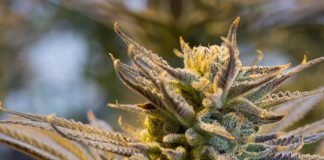
“Cannabis” and “CBD” aren’t competing categories — CBD is one compound found inside the cannabis plant, while “cannabis” usually refers to the whole plant or its psychoactive products. The confusion is understandable: both come from the same plant species, both are sold legally in various forms, and marketing language often blurs the line further. Here’s what actually separates them.
Quick answer
- Cannabis (commonly called marijuana when THC content is higher) refers to the plant and products made from it, including ones with enough THC to produce a “high.”
- CBD (cannabidiol) is one specific compound found in the cannabis plant. It does not produce the psychoactive “high” associated with THC.
- CBD can legally come from either hemp or higher-THC cannabis plants, but its legal status depends heavily on which one it came from and how much THC is in the final product.
The plant science: one species, very different chemistry
Hemp and what’s commonly called marijuana are both the Cannabis sativa species. What separates them legally and functionally is their THC content, the compound responsible for cannabis’s psychoactive effects. Hemp is defined as cannabis containing 0.3% or less THC by dry weight (a figure the federal hemp rule taking effect Dec. 11, 2026 supplements with a total-THC and per-container standard, as Ganjly has covered separately). Higher-THC cannabis, sometimes called marijuana, can contain anywhere from several percent up to around 30% THC depending on the strain and product.
Both hemp and higher-THC cannabis plants also contain CBD, often in substantial amounts. That’s the key point: CBD isn’t a separate plant or a hemp-exclusive compound, it’s a cannabinoid that shows up in cannabis generally, and products are labeled “hemp-derived CBD” or similar specifically to signal which plant, and which legal category, they came from.
Psychoactive vs. not
THC is the compound that produces cannabis’s intoxicating effects. CBD does not produce that effect on its own, and some research has even suggested CBD may blunt or offset some of THC’s psychoactive impact when the two are used together, though this is an active area of study rather than settled science. This is the functional reason the two get treated so differently: a product can be rich in CBD and still contain essentially none of what makes cannabis intoxicating.
Why the legal treatment is so different
Federal law draws its line at THC content, not at the presence of CBD. Hemp-derived products that stay under the hemp THC threshold have been federally legal to produce and sell since the 2018 Farm Bill (with the Dec. 11, 2026 total-THC standard tightening what “under the threshold” actually means). CBD products derived from higher-THC cannabis plants, even at the exact same CBD concentration, are treated under marijuana law instead, which means they’re federally restricted and only legal where state marijuana law allows them.
In practice, this means two bottles that read “CBD oil” on the label can sit in completely different legal categories depending on which plant they came from, something the label doesn’t always make clear.
Use cases: why people reach for one or the other
People generally seek out higher-THC cannabis products for its psychoactive and often recreational effects, or for medical uses in states with programs that allow higher-THC products. CBD is more often sought for its non-intoxicating profile, which lets people use it without the “high,” though CBD’s specific effects and the strength of evidence behind them vary by use case and shouldn’t be treated as settled medical fact across the board.
FAQ
Will CBD show up on a drug test? Pure CBD generally shouldn’t, but many CBD products contain trace THC, which can in some cases be enough to trigger a positive result, especially with frequent use.
Is CBD legal everywhere cannabis is illegal? Hemp-derived CBD is federally legal in most states, but some states restrict it further, and CBD derived from higher-THC cannabis plants follows that state’s marijuana law instead.
Does CBD get you high? No. CBD is not intoxicating on its own, which is the main functional distinction between it and THC-driven cannabis products.
Can a product contain both significant CBD and significant THC? Yes, many cannabis products are formulated with both, and the ratio of CBD to THC is often used specifically to shape the product’s effects.
This article is for informational purposes only and is not medical or legal advice.
Sources
- Healthline: Hemp vs. Marijuana
- Medical News Today: Hemp CBD vs. Cannabis CBD
- The Conversation: CBD, Marijuana and Hemp, citing NIH survey data on public understanding
- Ganjly: Federal Hemp THC Restrictions Now Start Dec. 11